

19th Sunday after Pentecost
1st Samuel 16:1-13
God said to Samuel, “How long will you grieve over Saul? I have rejected him from being king over Israel. Fill your horn with oil and set out; I will send you to Jesse the Bethlehemite, for I have provided for myself a king among his sons.”
Samuel said, “How can I go? If Saul hears of it, he will kill me.”
And, God said, “Take a heifer with you and say, ‘I have come to sacrifice to God.’ Invite Jesse to the sacrifice, and I will show you what you shall do, and you shall anoint for me the one whom I name to you.”
Samuel did what God commanded and came to Bethlehem.
The elders of the city came to meet him trembling and said, “Do you come peaceably?”
He said, “Peaceably. I have come to sacrifice to God; sanctify yourselves and come with me to the sacrifice.”
And, he sanctified Jesse and his sons and invited them to the sacrifice.
When [Jesse and his sons] came [to the sacrifice, Samuel] looked on Eliab and thought, “Surely the anointed is now before God.”
But, God said to Samuel, “Do not look on his appearance or on the height of his stature, because I have rejected him, for God does not see as mortals see; [mortals] look on the outward appearance, but God looks on the heart.”
Then, Jesse called Abinadab and made him pass before Samuel.
[Samuel] said, “Neither has God chosen this one.”
Then, Jesse made Shammah pass by.
And, [Samuel] said, “Neither has God chosen this one.”
Jesse made seven of his sons pass before Samuel, and Samuel said to Jesse, “God has not chosen any of these.”
Samuel said to Jesse, “Are all your sons here?”
And [Jesse] said, “There remains yet the youngest, but he is keeping the sheep.”
And, Samuel said to Jesse, “Send and bring him, for we will not sit down until he comes here.”
[Jesse] sent and brought him in. Now he was ruddy and had beautiful eyes and was handsome.
God said, “Rise and anoint him, for this is the one.”
Then, Samuel took the horn of oil and anointed [David] in the presence of his brothers, and the spirit of God came mightily upon David from that day forward. Samuel then set out and went to Ramah.
Origin Stories
A common trope in Hollywood these days is the origin story. They make entire movies about origin stories, and some characters get more than one. It’s an easy way to introduce a character, to explain where that character came from and what their motivations might be. But, origin stories aren’t restricted to fictional characters. Everyone has an origin story.
I was born in Oxnard, California, in 1979 to a Chinese father and a Filipino mother. My mother was born in the Philippines to two Filipino parents, her family going back for who knows how many generations in that country of over 7,000 islands in the Pacific Ocean. My father was also born in the Philippines, but he was 2nd generation Filipino, as his parents were born in China. My dad joined the US navy so he could immigrate to the United States, and my mother followed shortly after.
When my siblings and I were very young, my Dad sent us to Chinese school to learn Mandarin Chinese, but that was the only exposure we ever really got with that language, because our parents brought us up speaking English at home. Because of that, I only learned how to write a very small number of Chinese characters, like rice paddy and moon, and the only word I can ever remember how to say is cow’s milk, and I’m sure my accent is terrible.
When my parents didn’t want anyone to know what they were saying, they spoke to each other in Tagalog, which is the national language of the Philippines. This might sound like a perfectly normal thing for two people who were born in the Philippines to do, but I found out only a few short years ago that my mother didn’t even learn how to speak Tagalog until after she came to the United States! She grew up speaking Bicol, which is the local dialect of the area where she grew up. It was only after she moved to the U.S. that she made some friends from Visayas, a very different part of the Philippines from where she’s from. They were the ones who taught her how to speak Tagalog. So, my mother, who is from Bicol, speaks Tagalog with a Visayan accent. And, just in case you’re not grasping how strange that actually is, it would be like if you mother was born New Jersey, but for some reason never learned English, and then learned how to speak English from someone from Mississippi, so instead of having an New Jersey accent, she had a Mississippi one.
As for my dad, I also learned not too long ago that he didn’t really grow up speaking Tagalog either! His family spoke Mandarin Chinese at home, and that was also the language that was spoken at the school that he went to. He only really spoke Tagalog when he went into town, you know, to go shopping, or go to the movies, so his Tagalog was pretty rudimentary. So, this thing that I took for granted my entire life, this thing that a lot of 2nd generation people take for granted, parents talking in a “secret code” language, for my family actually ended up being kind of strange. Which is probably true about a lot of our backgrounds if we were to really do some research and dig into them.
A person’s origin story can tell you a lot about them. Our Hebrew Bible reading today is the origin story of King David, chosen by God to lead the Israelite people. God sends Samuel to Jesse in order to anoint one of his sons as the next chosen leader of Israel, and to everyone’s surprise, he chooses David, the youngest. It’s not long after this that David kills Goliath, and over time David becomes good friends with Jonathan, King Saul’s son, and eventually marries Michal, King Saul’s daughter. Saul becomes jealous of David, and tries to kill him, but David flees. Saul and all of his sons die in battle, and David becomes king. David leads the Israelites in many wars, always victorious, and according to tradition, it was David who wrote most of the Psalms.
The Bible is full of origin stories, a lot of them tracing a single lineage going all the way back to Adam in the Garden of Eden. It was important for the people of that time to have these larger-than-life stories about where their leaders and ancestors came from, and long lists of who their ancestors were. Moses was left in a basket in a river for Pharoah’s daughter to find. God called out to the boy Samuel in the night, over and over again until Samuel understood who was talking to him. David was chosen by God as a young boy and almost immediately saves the Israelite army by slaying a giant. And, much later, the virgin births of John and Jesus, both coming with some pretty impressive pedigrees, with Jesus, of course, being the Son of God. These origin stories give these figures legitimacy and authority. People could point back to these stories and say this is why they’re important. This is why we follow them and honor them. It’s a form of validation.
It might seem strange to our modern sensibilities to focus so much on lineage and ancestry, but it wasn’t that long ago that these kinds of things were more important to the general public. And, there’s been a resurgence of interest in understanding one’s lineage, with services like Ancestry.com and 23 & Me.
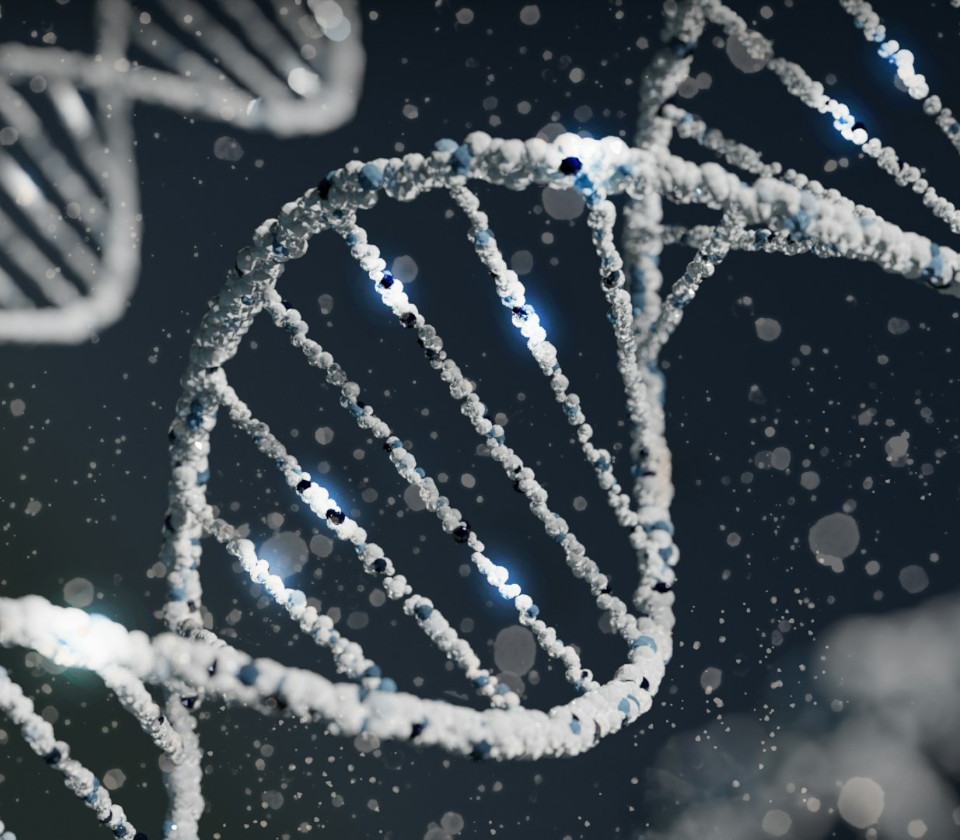
Some of you know this story, but for those who don’t, I actually did a 23 & Me DNA test a few years ago. When you do these kinds of things there are a bunch of terms and conditions that you have to agree to before you can move forward, and there was this one warning that I thought was pretty funny, but I didn’t really think about too much, at the time. It said something along the lines of, you cannot unlearn what you learn by taking this test. Results of DNA tests are not always what you expect them to be.
I naively clicked “I understand” pretty confident that I knew what would show up if I took a DNA test. It would say that I was half Chinese, and mostly half Filipino, with probably a tiny bit of Spanish thrown in, because the Philippines were colonized by Spain. No big deal, I was mostly just curious. But, when I got the results of the test, it said that I was 75% Filipino, and only 25% Chinese. That meant that my dad was only half Chinese. My mind was racing with all kind of ideas about what that could possibly mean, but mostly I had no idea how I was gonna tell my dad! He had believed for his entire life that he was 100% full-blooded Chinese, and neither of his parents were around anymore for us to ask any questions. Anyway, to make a long story short, I did try to tell him about the test, and how he was only half Chinese, but he simply waved it off, saying, “Oh, they don’t know what they’re talking about,” and he left the room. But, I figured, I had done my due diligence as a son. I had passed the information on, and what he did with that was his own business.
All of that is to say that you just never know. If you can’t even know these things about yourself, how could you possibly know them about someone else? We all have weird, complicated, surprising, mysterious, beautiful, wonderful, extraordinary stories hidden within all of our backgrounds. But, we are not defined by where we come from, or who we come from. You are more than your origin story. David probably had more going for him than almost any other person in the world. He had an amazing lineage, he was chosen by God, anointed by Samuel, and for a while, things were good. He was a powerful king, and was a fierce warrior on the battlefield. He did amazing things, but he wasn’t perfect. David made mistakes. He committed adultery with Bathsheba, and even had her husband killed. This displeased God, and things started to go downhill. David made bad choices, and he suffered the consequences for them.
You can’t tell by just looking at someone who they are, what they’re about, what they believe, what they’ve done, none of that. Even if you think you know their origin story, chances are, you probably don’t. We can’t make assumptions about someone based on what they look like. But, you can be sure of one thing. That whenever you encounter someone, that person is a child of God, with all of the potential that entails. Origin stories might be fun, and even informative, but they do not determine who we are, and they don’t determine our choices. We have a responsibility to love everyone and take care of everyone, no matter where they come from, or who their ancestors are. And, that includes ourselves. Never forget that you have within you all of the possibilities of a child of God, no matter where you come from, or who your ancestors are. Your origin story only matters as much as you let it.
Amen.
~ Rev. Charles Wei

