

23rd Sunday after Pentecost
Originally attributed to the 8th century prophet Isaiah ben Amoz, scholars now believe the Book of Isaiah is comprised of the works of three different writers: Proto-Isaiah (chapters 1-39), written by the prophet Isaiah, Deutero-Isaiah (chapters 40-50), written by an anonymous author in the 6th century BCE during the Babylonian exile, and Trito-Isaiah (Chapters 56-66), written after the Israelites returned from exile.
Together, these three works create an overarching meditation on the destiny of the Israelite people, as they are sent into exile, persist through the exile, and then return. The book serves to explain why the Israelites were sent into exile, namely for turning their backs on God, and how God worked for their reconciliation and to bring them home. Unlike the prophets Amos and Micah, who find righteousness in Israel’s covenant with God, Isaiah finds righteousness within God’s holiness.
Isaiah 9:1-7 is often used during Advent and Christmas, as a prophetic declaration of Christ coming into the world, and there are many parts of the gospels that draw their inspiration from Isaiah, either quoted directly, or as a framework for their stories and doctrine. This text was written as an expression of hope for a good leader, at a time when they were being brutally oppressed by Assyrian emperors. And so now, in our modern times, it is all but impossible to read the names “Wonderful Counselor, Mighty God, Everlasting Father, Prince of Peace,” and not think of Jesus.
Isaiah 9:1-7
But, there will be no gloom for those who were in anguish. In the former time he brought into contempt the land of Zebulun, and the land of Naphtali, but in the latter time he will make glorious the way of the sea, the land beyond the Jordan, Galilee of the nations.
The people who walked in fear
have seen a great light;
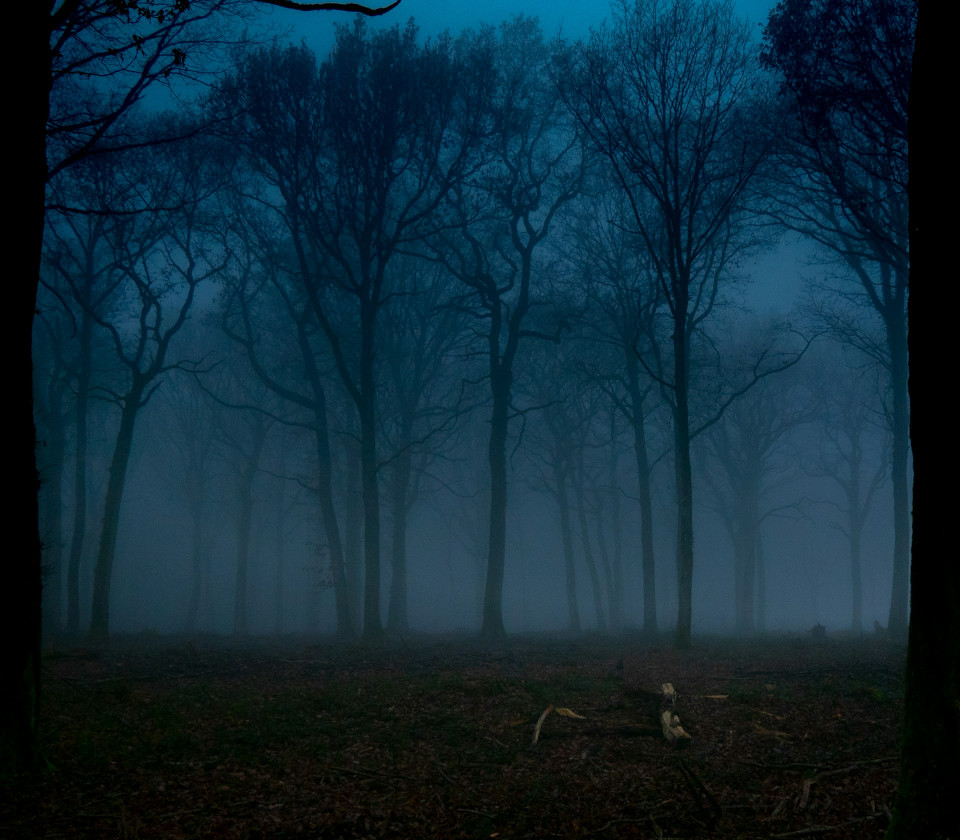
those who lived in a land of deep shadows—
on them light has shined.
You have multiplied exultation;
you have increased its joy;
they rejoice before you
as with joy at the harvest,
as people exult when dividing plunder.
For the yoke of their burden
and the bar across their shoulders,
the rod of their oppressor,
you have broken as on the day of Midian.
For all the boots of the tramping warriors
and all the garments rolled in blood
shall be burned as fuel for the fire.
For a child has been born for us,
a son given to us;
authority rests upon his shoulders,
and he is named
Wonderful Counselor, Mighty God,
Everlasting Father, Prince of Peace.
Great will be his authority,
and there shall be endless peace
for the throne of David and his kingdom.
He will establish and uphold it
with justice and with righteousness
from this time onward and forevermore.
The zeal of the God of hosts will do this.
Prince of Peace
There’s a word in this text that I’ve been grappling with for a long time, over ten years now since it was first pointed out to me in seminary. It’s the word “darkness” or “dark,” particularly when it’s used as a metaphor for “evil,” “bad,” or “ignorant.” Up until that point I had used the word “dark” or “darkness” in that way for my entire life. It’s in all of the literature and the media all around us, characters in movies and TV will say things like, “I see a darkness in you,” or “It’ll be a dark day when…” such and such happens. I honestly never gave it a passing thought. So, when one of my black professors in seminary told us that language like that was racist, I honestly didn’t understand what she was talking about.
But, like I always say, language matters. And, when your very language tells you that something is bad or wrong, it just becomes a part of the way you think. So, when “dark” and “darkness” are used to describe something bad, evil, or wrong, and “white” or “whiteness” are used to indicate cleanliness, goodness, and holiness, “pure as the driven snow,” it’s inevitable that we would apply those ideas to people. Language is stored in and processed through our brains, and if our brains are already wired to think in a specific way, it’s hard to break that pattern.
I brought this up in Bible study, and we tried to think of what other words we could use instead of dark or darkness. A lot of times I’ll use the word “shadow” instead, but it isn’t always a great substitute. One option that someone suggested that I really liked was the word “fear.” Because, if you think about it, a lot of the things that we consider “bad” or “evil” are based in feelings of fear.
We talked about why “darkness” may have come to be synonymous with “evil”, and the consensus seemed to be that it’s because we can’t see in the dark. Darkness is scary, and you can’t tell if there’s danger or where danger might be coming from. At least in the light, you have a chance.
I was trying to think about how I’ve interacted with darkness in my life, and since we just had Halloween, of course, that’s where my thoughts went. I love Halloween; that’s why I take my vacation around this time so that I can be with my family, and I can decorate my sister’s house, scare some children, and pass out candy.
There was this one time when I was a youth leader, it was around Halloween, and I got this wild idea to take the kids out into the woods where I had set up scary challenges for them to do by themselves in the middle of the night. One of the challenges was for someone to walk alone, probably a good half-mile out to the main road, and find something I had hidden in the payphone. Most of the challenges were like that: they had to go out into the woods by themselves to do…something.
We made a fire, one of the parents sent us some pizzas, and we made s’mores while we waited for people to come back from their challenges.
As we were wrapping up for the night, we noticed an abandoned RV out in a field that we decided to check out. It was pretty creepy and pretty gross, and I eventually decided that I’d had enough of the abandoned RV, so I started heading back to my car, while the kids continued to explore for a bit. Right when I got to my car, all of the kids started screaming, and I looked up to see them all running towards me. I had no idea what was going on, but it felt like we needed to get out of there, so I jumped in my car, started the engine, and started yelling at them to get in the car! I was freaking out, and I was trying to do a head-count to make sure we weren’t missing anyone, and I realized I was indeed missing one of the children, a kid we called by his last name, Schuelke, because his name was James, the same name as my brother.
So, I was yelling, “Where’s Schuelke?! Where’s Schuelke?!”
Everyone was looking around, trying to find him, when we notice off in the distance walking towards us with full belly laughing, was James Shuelke. He had hidden in the grass near the RV, and as the rest of the kids started walking towards the car, he jumped up and started roaring, sending them running and screaming in fear.
It ended up being a really fun night, and I’m sure it’s a fun memory for everyone who was there, but when I think back on that night, all I can think about is how lucky I was that I was actually able to bring all of the kids back safe and sound. It really didn’t occur to me until years later that mountain lions live out there, and there was a very real chance that the kids could have been attacked by one while they were out doing the challenges in the woods by themselves, that I sent them on! So, that’s a fear that I still have, even when it’s not dark; I can’t help but imagine a mountain lion, sitting up in a tree, waiting to pounce on me.
People like doing scary things in a safe environment. Horror movies, roller coasters, sky diving and bungee jumping, ghost stories around the campfire. You can have the thrill and the adrenaline rush without a huge risk of danger.
But, as I thought about the kids doing the Halloween challenges in the wilderness, walking in the literal darkness, and I’m assuming they were all scared to some degree, I couldn’t help but think about other kids, also walking in the dark, also scared. But, not the fun kind of scared where you know the rest of the youth group is waiting for you to get back, where there’s pizza and s’mores waiting for you, and your own warm bed to sleep in when you get home. No, I’m talking about the kind of scared where you don’t know what’s gonna happen, when you don’t know where your parents are, when you are truly and utterly alone with all of the life experience of someone who isn’t even ten years-old.
I’ve been hearing the term “unaccompanied minor” here and there the last few years, but I wasn’t fully cognizant of what that really was. I mean, if I thought about it for a few minutes, I would probably get the gist of it, but I hadn’t really learned very much about it, and there was no way I could really understand what it would be like to be one of these unaccompanied minors, a child who has no legal immigration status, and has no legal guardian to take care of them. About 70% of the unaccompanied minors that come into the United States are between the ages of 15 and 17, and as horrific as that is, we can at least think, sure, fine, not ideal, but a kid that age has at least some capacity to take care of themselves. But, there is a category of unaccompanied minors between the ages of 12 and 0, and I honestly don’t even know what to think about that. 12? Okay. 10? Maybe. 8? Depends on the kid, I guess. 5? Are there 5 year-olds crossing the border by themselves? I suppose there must be, if we have statistics for them. Please, God, tell me there aren’t 2 year-olds showing up at the border on their own. I don’t even want to know or try to imagine why the statistic starts at zero years of age.
People come here for all kinds of reasons. Some people come here for opportunity, some people come here chasing after a dream, but a child? There is only one reason why an unaccompanied minor would come here: because they’re afraid, and they think that it’s safer here. The way that our world currently functions creates unaccompanied minors. And, things aren’t as safe here for them now as they used to be. We are living in a situation right now that is practically screaming for a prophet to tell us that we have been going down the wrong path and that God is not happy with us. And, there are prophets now. And, they are speaking. They may not claim the title of prophet, or even think that they are prophets, but they speak the truth, and the truth is: we are in trouble.
As we look forward to the celebration of Christ’s birth, I often find myself having to remind people that Jesus was born over 2,000 years ago. He already told us what we were doing wrong, and what we should be doing instead. We still have racism and misogyny. We still have greed and jealousy and war. We celebrate Jesus’ birth every year because we have to remind ourselves every year that this isn’t the way things are supposed to be. We can do better. We have to do better…for everyone who suffers unjustly, for the immigrants in our country, whether they’re here legally or not, Jesus doesn’t care! For the unaccompanied minors, for all of the children of the world who are going to inherit whatever it is that we’re going to leave them when we’re gone. We have to do better. Jesus is the Wonderful Counselor, Mighty God, Everlasting Father, Prince of Peace. Jesus is the Prince of Peace and we need to do everything we can to follow his example. Amen.
~ Rev. Charles Wei

