

7th Sunday after Pentecost
Revelation 1:4-8
John, to the seven churches that are in Asia:
Grace to you and peace from him who is and who was and who is to come, and from the seven spirits who are before his throne, and from Jesus Christ, the faithful witness, the firstborn of the dead, and the ruler of the kings of the earth.
To him who loves us and freed us from our sins by his blood and made us a kingdom, priests serving his God and Father, to him be glory and dominion forever and ever. Amen.
Look! He is coming with the clouds;
every eye will see him,
even those who pierced him,
and all the tribes of the earth will wail on account of him.
So, it is to be. Amen.
“I am the Alpha and the Omega,” says the Lord God, who is and who was and who is to come, the Almighty.
Life-giving Water
So, after spending a few months with Jeremiah, we are now moving on into the Book of Revelation. This book can be confusing, and even scary at times, because of the imagery that John used, but we’ll go through it all together, for as long as the lectionary keeps us here, and to the best of our ability, we’ll try to figure out what it all means, and how to apply it to our lives.
Here in Revelation 1, we basically have an introduction. John is writing to seven churches. The text says the churches are in Asia, but scholars believe that they are seven churches in the area where modern-day Turkey is now. John starts with a greeting, “Grace and peace…” and then moves on to an extensive description of who God is and who Jesus is, writing that they extend their greetings, as well. He uses a lot of flowery language here: “who is and who was and who is to come,” “firstborn of the dead,” “to him be glory and dominion forever and ever.”
John is using this language to make a point. He wants the reader to understand how important Jesus is, and his relationship with God, by listing off the various things that he’s known for. The text conveys who Jesus is even in its stylistic delivery. Jesus is not a simple farmer or fisherman, he’s “the ruler of the kings of the earth,” “he is coming with the clouds,” “all the tribes of the earth will wail on account of him.”
This poetic language reminded me of an event that I attended during General Synod. It was a poetry night hosted by our General Minister and President, Rev. Dr. Karen Georgia Thompson, and Rev. Dr. Carrie Call, the conference minister for the Penn Central Conference. There had never been an event like this at General Synod, so it was an experiment of sorts. People could sign up to be readers, who would have three minutes to share an original poem, or they could sign-up to be part of the audience.
I love poetry, which I think a lot of you know, and I used to regularly perform poems that I wrote. I used to be part of a poetry group in Los Angeles, call the Poet’s Jazz House, run by a woman who has since become a very good friend of mine named Tuesday Conner. I used to drive into L.A. every Thursday night to watch people perform their poems, and I would share mine as well. Typically, I would get home somewhere between midnight and two o’clock in the morning.
There were other times in my life that I’ve shared poetry. I was part of a poetry group in seminary, and I’ve shared poems from the pulpit a few times, sharing my poems is nothing new for me. But, for some reason, when I was looking into this poetry night thing at General Synod, I kind of felt like I just wanted to watch. So, that was what I tried to sign up for. But, when I tried to register through our conference office, I was told that there were no more seats available. I was disappointed, but it wasn’t really a big deal. The next day, I got an email from the conference office saying that there was a second poetry night registration, and that one still had space, so they were able to sign me up after all. So, I thought, great! I was going to be able to go. It wasn’t until a few days later that it dawned on me that the second registration was for people who wanted to read. So, I ended up being a reader, after all.
The reason they had put this poetry night event together is because the Rev. Drs. Karen Georgia Thompson and Carrie Call are poets. They wanted to create an event to promote the idea of using poetry in worship. After all, a lot of the Bible is poetry. Think of the Psalms or the Song of Solomon. Look as the poetry of today’s reading from Revelation. Songs are just poetry set to music. Poetry is one of the ways that we express ourselves, and it’s a very specific way that we express ourselves. We can convey ideas through poetry in a way that just isn’t possible through prose.
So, there were about fifteen people who signed up to be readers, including me, even though that wasn’t what I had intended to do. And, I was honestly shocked at how many people had signed up just to watch; there had to be almost a hundred people in that room. So, if you think about how many people go to General Synod, let’s say almost 2,000 people, that’s a pretty significant percentage of people interested enough in poetry and how it can be used in worship, that wanted to attend a poetry night as part of their General Synod experience: about 5%.
The readers shared all kinds of poems. Some were like stories, some of them rhymed, though most of them didn’t. A couple of readers shared slam poetry, which is delivered a little bit faster and has a specific cadence to it; it’s kind of hard to describe, it’s one of those things where you know it when you see it. Some of the poems were sad, some were beautiful. It was incredible the diversity of poetic creativity that showed up to be part of this. We were each given three minutes, but I honestly think I was the only one who adhered to that rule, which I was slightly annoyed by, because I could have shared something longer if I had known that everyone else was going to break that rule.
But, I’m kind of glad that I was given this restriction, because it forced me to share a poem that I realized I had never shared before. I wrote it after my Poet’s Jazz House days, and after my seminary poetry group days. It felt kind of special to be sharing it for the first time at General Synod, and I told them that I had never shared it with anyone before. So, this is the poem that I shared, that made its debut at the 2025 General Synod of the United Church of Christ. It’s called “Life-giving Water.”
Night falls and the lights come on,
Overlooking the water.
It’s so peaceful.
Beautiful,
Until morning comes,
And the machine screams to scald the milk,
How many did we sacrifice,
So that we could sip it extra hot,
On a sleepy morning,
With nothing to worry about,
Except where to meet friends for lunch?
Our roads are paved with the moans of the forgotten,
Whom we drive over on the way to work,
As we lead them to the altar of our want,
Pulled by the chains of our greed,
Only we don’t think about that,
Because to think is to feel,
And to feel is to act,
And we have only two options,
To correct the wrongs of our ancestors,
And break the turning wheels of our collective indifference,
Or forget,
Which is the easier path,
To mouth our morning rituals,
And not worry about anything that might change us.
How hot would our cups have to be,
To make us forget their price?
We scald our tongues and call it good,
But that kind of pain’s not enough to pay my debt,
Which is a degree and a half higher than my net worth,
But, I can still claim the world’s ten percent,
So what do I know?
I know my food is cheap,
And my water’s clean,
And I like it extra hot in my jasmine green.
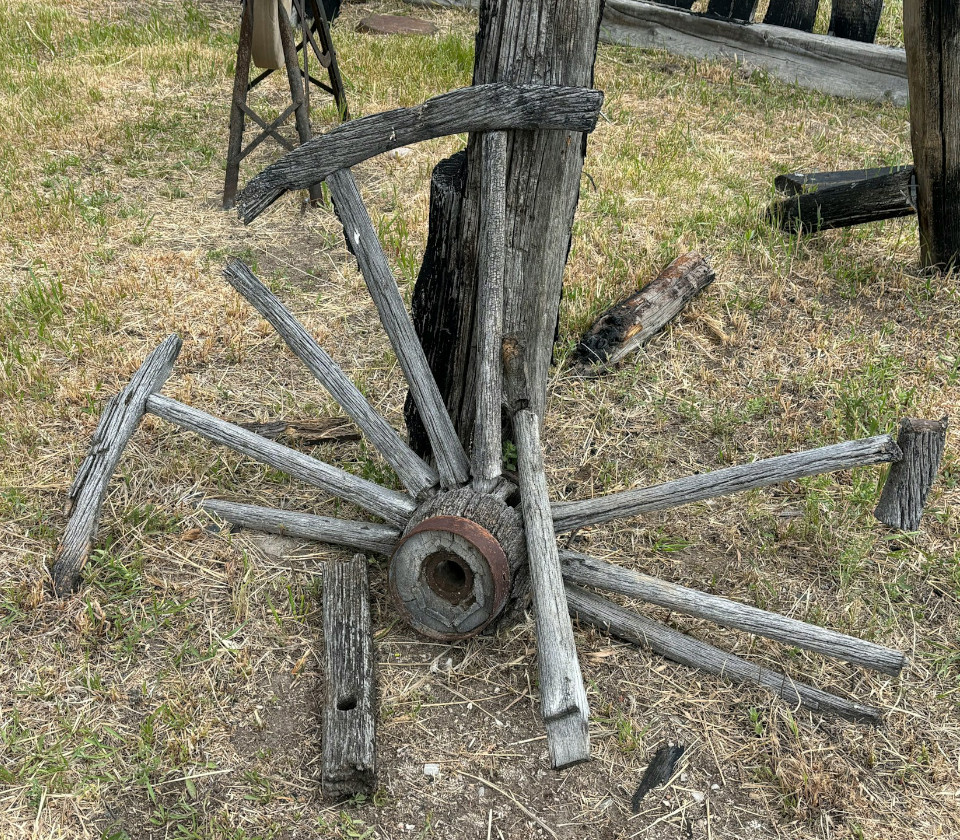
I am but a single spoke of the wheel,
But I exert my force,
To keep it moving,
And I have to ask,
Is it a choice?
Because there’s always a choice.
Or at least the illusion of one,
And if we could imagine hard enough,
That our choices could be different,
Then maybe one day,
They could be,
And we would recognize the pleasure of the wheel for what it really is,
A song of pain,
Not only for the unfortunate ground beneath its relentless turn,
But for the spokes,
Bathed in water,
That could never be hot enough.
After all of the readers shared, Karen Georgia spoke for a bit about how important poetry was to her, but she never really thought about publishing. After she had amassed a large quantity of poetry, she realized that God had not given her that gift to keep it to herself. God doesn’t give us gifts for ourselves. Our gifts are meant to be shared with the world. We are supposed to be a light on the hill, not a light under a bushel basket. So, she published.
While she was telling us this, it made me think of the card game that I had created, instead of writing an ordination paper. I had created that game to teach UCC history, theology, and polity, and my hope was that it could be used as a tool for confirmation or new members classes. Unfortunately, I have always been better at making things than marketing things, so, although it is available to be purchased online, it has never really lived up to its potential. No one really knows about it, so no one can use it. But, as I was listening to Karen Georgia talk about the importance of sharing our gifts, I was filled with this overwhelming guilt. I had not done enough to publicize my game. I created it for a reason, but that doesn’t matter if nobody knows about it.
So, I went up to her after the poetry event, and I told her how it felt like she was talking directly to me with her message, and I told her about my game. And, she told me to send her an email about it. So, maybe now something will happen.
We all have our God-given gifts, every single one of us. Your gift might be baking, or sewing, or finance, or photography, or teaching, or animal husbandry. You might be a painter or a sculptor, you might be good at construction, or you might be good at listening to people. Whatever your gift is, God gave you that gift for a reason. We cannot hoard our gifts for ourselves; they are meant to be shared with the world. And, the more we share our gifts, the better with world will be.
Amen.
~ Rev. Charles Wei

